
Custom vs. Standard MCC Solutions for Heavy Industry
- February 24, 2026
- Posted by: Salman
- Category: Industrial Panels
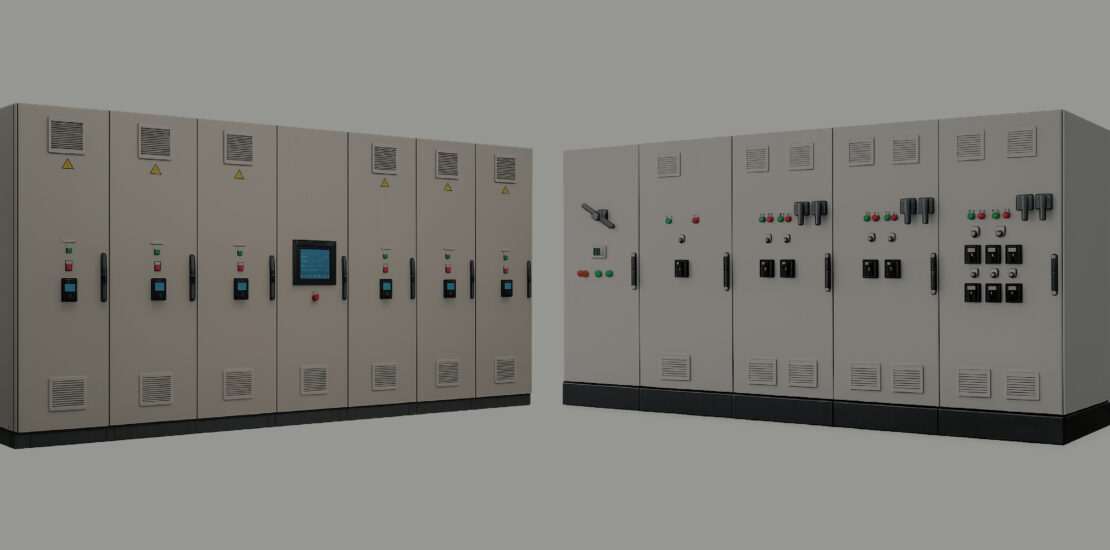
In heavy industrial operations, Motor Control Centers (MCCs) aren’t just electrical panels — they’re critical infrastructure. The wrong choice can cause integration headaches, safety risks, or costly redesigns. But how do you know if your project needs a custom-engineered MCC or if a standard pre-configured panel will suffice?
At Pinnacle Power and Controls, we work with engineering teams facing this exact decision, and the answer often depends on balancing cost, compliance, and long-term scalability.
This guide provides a detailed comparison between standard and custom MCCs — exploring cost, design flexibility, compliance, application fit, and long-term value. Whether you’re specifying a new build or upgrading aging infrastructure, this article helps you make the right technical and financial call for your facility.
What Defines a “Custom” vs. “Standard” MCC?
Before making any decision, it’s essential to understand what distinguishes a custom MCC from a standard MCC and how vendors approach each category.
What Is a Standard MCC?
- Pre-configured or catalog units offered by large OEMs
- Limited layout or component modifications allowed
- Common voltages (480V, 3-phase) and control types
- Fixed bucket configurations, often with standard breakers and starters
- Often suited for low-complexity or repetitive applications
Standard MCCs offer speed and cost advantages when your requirements fit inside the box — literally and figuratively.
What Is a Custom MCC?
- Built to your specs: load type, I/O needs, SCADA/PLC interface, safety level
- Flexible bucket layout, control sequencing, and breaker coordination
- Accommodates unique voltages, environments (e.g., corrosive, explosive, cold)
- Includes advanced options: arc-flash-rated enclosures, smart relays, VFDs, and communication modules
- Can be packaged in shipping containers or walk-in buildings
Pinnacle Power and Controls specializes in custom-engineered MCCs that integrate with your control system, facility layout, and process logic — not just your power distribution chart.
Modular MCCs: A Hybrid Middle Ground
- Many “custom” MCCs use modular bucket systems that allow configuration without full redesign
- Common in containerized MCCs and expandable indoor panels
- Support plug-and-play upgrades as operations evolve
Modular doesn’t mean generic — it means flexible. A well-designed modular MCC can scale with your plant’s needs while remaining compliant and efficient. Ultimately, the right choice depends on your project complexity, integration requirements, and long-term operational goals. Whichever route you choose, you’ll still need a reliable supplier, and our MCC vendor checklist can help you evaluate vendors objectively.
2. Key Differences: Technical, Operational, and Safety Implications
While both custom and standard MCCs serve the same core function — centralized motor control — their differences become evident when you look at how they handle complexity, integration, safety, and compliance. This section breaks down what truly separates them in real-world plant environments.
Electrical Layout and Integration Flexibility
- Standard MCCs: Fixed layouts, predefined component slots, minimal I/O flexibility
- Custom MCCs: Tailored to match PLC/SCADA architecture, control logic, and process sequencing
- Custom builds support:
- Mixed-voltage systems
- Variable load profiles
- Isolated sections for redundancy and failover
Custom MCCs are designed around your plant’s needs — not around vendor limitations.
Automation and IIoT Compatibility
- Standard MCCs: Often lack native smart device integration or protocol support
- Custom MCCs:
- Support Modbus TCP, Ethernet/IP, OPC UA, MQTT
- Include smart relays, metering, HMI access, and remote diagnostics
- Easily connect to CMMS, SCADA, and condition monitoring platforms
Pinnacle Power and Controls custom MCCs are designed to act as smart nodes in Industry 4.0 architectures. Your choice between custom and standard MCCs should also reflect where the future of Motor Control Centers in heavy industry is heading.
Arc Flash Risk Mitigation and Compliance
- Custom MCCs: Designed with NFPA 70E and IEEE C37.20.7 in mind — support arc-resistant construction, breaker coordination, and remote access
- Standard MCCs: Typically meet basic UL 845 but may lack advanced protection features or clear coordination strategies
With the right vendor, a custom MCC can significantly reduce personnel risk and streamline compliance audits.
Serviceability and Modularity
- Standard units may not support quick swap or isolation of individual buckets
- Custom/modular MCCs support:
- Plug-and-play bucket replacement
- Compartmentalized sections for safer service
- Thermal zoning and maintainability layout
- Plug-and-play bucket replacement
A well-designed MCC reduces MTTR and arc-flash exposure during maintenance.
3. Delivery Time, Cost, and Engineering Resources
Many engineers initially lean toward standard MCCs because they appear faster and cheaper — but that’s not always the full picture. While standard units do offer speed in certain situations, custom MCCs often win on long-term value, process alignment, and avoided rework.
Here’s how the cost, delivery, and design effort compare.
Standard MCCs – Faster Delivery, Lower Initial Cost
- Pre-engineered designs mean shorter lead times (4–8 weeks)
- Often less expensive upfront — especially when based on stock components
- Limited configuration reduces design overhead
- Less documentation, less flexibility, more responsibility on the customer for integration
Good fit when needs are simple, timelines are short, and risk is low.
Custom MCCs – Longer Lead Time, More Planning, Better Fit
- The engineering cycle may take longer (8–14+ weeks, depending on complexity)
- Requires:
- Load study and environment analysis
- Communication mapping
- PLC/HMI coordination
- Arc-flash modeling and breaker study
- Pinnacle Power and Controls provides 3D layout drafts, BOMs, test plans, and support during submittal review
While more effort up front, custom MCCs minimize integration time and downstream headaches — especially in complex or high-value installations.
Lifecycle ROI and Total Installed Cost
- Standard MCCs may cost less initially, but:
- Often require costly add-ons, cabling, rework, or retrofitting
- May not scale as plant needs change
- Custom MCCs:
- It is more efficient to maintain
- Often save on energy, downtime, and compliance costs over 10+ years
- Support expansion through modular bucket design
Think beyond installation — consider lifecycle performance, maintainability, and upgrade potential.
4. When to Choose a Custom MCC: Use Cases
Custom MCCs are often required in environments where standard panels fall short — whether due to voltage complexity, safety risk, environmental constraints, or automation demands. In this section, we explore high-impact scenarios where custom builds are the smart (and sometimes only) choice.
High Arc Flash Risk or Regulatory Requirements
- NFPA 70E, IEEE C37.20.7, and OSHA guidelines often require engineered arc-flash mitigation
- Examples:
- Power generation
- Oil & gas refining
- Chemical processing
- Custom MCCs include arc-resistant compartments, remote operation, and breaker coordination
If personnel safety and regulatory compliance are top priorities, a custom MCC is often non-negotiable.
Remote Installations or Harsh Environments
- Custom MCCs can be designed in:
- Climate-controlled shipping containers
- Explosion-proof enclosures
- Outdoor-rated housings with thermal and ingress protection
- Ideal for mining, wind, solar, and remote pumping stations
Pinnacle Power and Controls containerized MCCs are pre-wired, climate-controlled, and plug-and-play — perfect for rapid field deployment.
Complex Motor Logic, VFD Networks, or Custom SCADA Requirements
- Custom MCCs allow:
- Complex PLC sequences
- Smart relay coordination
- Multi-tier VFD control
- Live integration with SCADA/HMI systems
- Critical in plants running:
- Conveyors, kilns, reactors, chillers, or distributed pumping systems
You can’t automate a complex process with a cookie-cutter panel.
5. When a Standard MCC Is Sufficient
While custom MCCs offer flexibility and integration power, not every project requires a tailor-made solution. In many straightforward or low-risk environments, standard MCCs provide excellent performance with faster turnaround and lower upfront costs.
This section identifies scenarios where a standard, off-the-shelf MCC is a smart and efficient choice.
Simple Fixed-Speed or Non-Critical Motor Loads
- Examples:
- HVAC systems
- Utility pumps
- Small mixers or fans
- Minimal logic or sequencing required
- Limited integration with SCADA or PLC systems
For base-load motors that run continuously and don’t require feedback or control complexity, a standard MCC is often more than sufficient.
Temporary Installations or Mobile Panels
- Construction sites, pilot systems, or mobile production units
- Applications requiring portability but not advanced automation
- Standard MCCs can be racked or caged for field movement
Temporary systems benefit from the speed and plug-and-play simplicity of a standard panel — without investing in long-term custom features.
Basic Facilities with Common Power Infrastructure
- Uniform voltage levels (e.g., 480V 3-phase)
- Few process changes or automation upgrades are expected
- Repetitive load types and consistent electrical demand
Plants running low-risk, low-variability loads benefit from standardization — especially where future expansion or integration isn’t anticipated.
6. Pinnacle Power and Controls’ Hybrid Approach: Engineered Standards
Choosing between custom and standard MCCs doesn’t always have to be a binary decision. Pinnacle Power and Controls offers a hybrid approach that blends the configurability of modular systems with the precision of tailored engineering — ensuring you get exactly what your application requires without delays or overdesign.
Pre-Engineered Modules with Custom Integration
- Modular bucket architecture
- Pre-tested compartments and power sections
- Custom-built for your:
- Communication protocol (Modbus, Ethernet/IP, OPC UA)
- Load profile
- Panel layout (top/bottom entry, service access)
- Faster delivery due to pre-approved subassemblies
You get the engineering rigor of a custom panel — with the lead time and reliability of standardized modules.
Containerized or Indoor Mounting Options
- Drop-in containerized MCCs:
- Climate-controlled
- Arc-flash rated
- Pre-wired, labeled, and tested
- Indoor panels designed to spec but using off-the-shelf shells and sections
Whether indoors or in remote operations, Pinnacle Power and Controls provides a fit-for-purpose housing that’s ready for field use — no extra fabrication needed.
Built for Lifecycle Flexibility
- Designed to:
- Add new buckets later
- Support remote upgrades (firmware, logic)
- Scale with your plant’s growth
- Full BOM, CAD, and logic documentation delivered with each build
- Lifecycle support included: training, support, and procurement sourcing
You don’t just buy a panel — you gain an adaptable platform backed by engineers who understand your application.
Frequently Asked Questions: Custom vs. Standard MCCs
Q1: What’s the main difference between a custom and standard MCC?
A standard MCC uses predefined layouts and components, ideal for basic applications. A custom MCC is engineered for site-specific requirements like arc-flash mitigation, automation, complex load control, or harsh environments.
Q2: Are custom MCCs always more expensive?
Not necessarily. While custom MCCs may have higher initial design costs, they often deliver greater long-term ROI through better integration, reduced downtime, modular expandability, and safety compliance.
Q3: How do I know if my facility needs a custom MCC?
If your plant has advanced automation, IIoT goals, high-density motor clusters, or regulatory pressures (e.g., NFPA 70E, IEEE arc-flash), a custom MCC is likely the smarter choice.
Q4: Can I customize parts of a standard MCC?
Yes — many vendors, including Pinnacle Power and Controls, offer modular or “engineered standard” MCCs that combine standard hardware with custom logic, bucket layouts, and communication modules. If your customization plans include PLC, SCADA, or IIoT connectivity, our guide on integrating MCCs with plant automation systems covers the controls side in more depth.
Q5: What’s the typical lead time difference?
Standard MCCs may ship in 4–8 weeks. Custom-engineered MCCs often require 8–14+ weeks, depending on complexity, but save time on integration and commissioning later.