
Energy Efficiency in Motor Control: Strategies for Modern Industrial Plants
- February 24, 2026
- Posted by: Salman
- Category: Industrial Panels
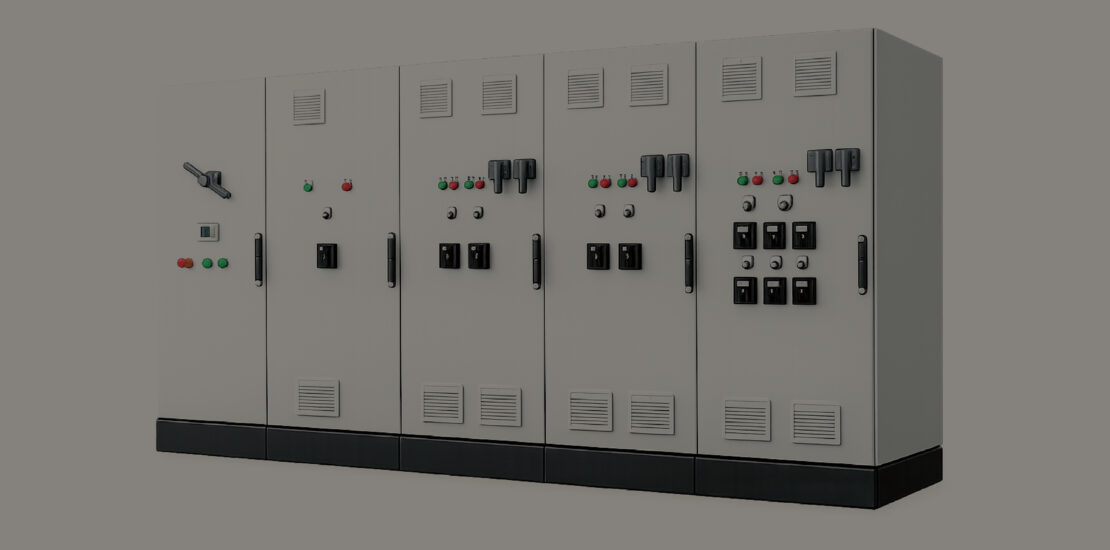
In most industrial plants, motors account for up to 70% of total electricity usage. From pumps and fans to conveyors and compressors, inefficient motor control can silently drain energy, raise utility bills, and hinder sustainability targets.
Today’s industrial engineers aren’t just responsible for uptime — they’re expected to help lower operating costs, reduce carbon footprints, and comply with energy efficiency regulations.
Fortunately, motor control centers (MCCs) have evolved. Modern MCCs, especially when equipped with Variable Frequency Drives (VFDs) and real-time energy monitoring, offer significant gains in efficiency, reliability, and control.
This guide will help you understand:
- How energy losses occur in motor control
- What role do VFDs and automation play
- How intelligent MCCs track and optimize usage
- The return on investment for upgrading to energy-aware systems
Whether you’re managing a high-load power plant or optimizing a mid-sized manufacturing line, improving motor control efficiency isn’t just an upgrade — it’s a strategic win for performance and profitability.
Understanding Motor Energy Consumption in Industry
Electric motors are the largest consumers of electricity in industrial environments, often accounting for two-thirds or more of total plant energy use. Yet many motor systems still operate using outdated or fixed-speed control methods, wasting power during partial loads or idle cycles.
Where Energy is Lost in Traditional Motor Systems
Traditional MCCs typically control motors using across-the-line starters or soft starters, which deliver full voltage regardless of real-time demand. This results in:
- Overconsumption during low-load conditions
- Mechanical wear from abrupt starting/stopping
- Inefficient airflow or pressure from fans and pumps running at constant speed
- Power factor penalties due to reactive load imbalance
Even small inefficiencies in motor systems can scale into significant annual energy losses across large industrial operations.
Energy Cost Implications for Industrial Plants
Let’s put it into perspective:
- A single 50 HP motor running 24/7 at full speed when it only needs 60% load could waste over $5,000/year in unnecessary energy
- Multiply that by dozens or hundreds of motors, and annual energy waste can exceed six figures
Pro Insight: Motors are often oversized for peak demand, which means they’re underloaded much of the time. Without adaptive control, this leads to efficiency losses.
How VFDs Improve Energy Use in MCCs
Variable Frequency Drives (VFDs) are among the most impactful technologies for reducing energy waste in industrial motor systems. By adjusting a motor’s speed to match actual load requirements, VFDs allow precise control of energy use — eliminating the inefficiencies of fixed-speed operation.
What Does a VFD Do?
A VFD controls the frequency and voltage supplied to a motor, which directly adjusts motor speed and torque. Unlike across-the-line starters that run motors at 100% regardless of need, VFDs deliver just enough power to match real-time demand.
This dynamic speed control:
- Reduces energy use in partial-load conditions
- Minimizes wear and tear on mechanical components
- Allows soft starts and stops, extending motor life
- Enhances power factor correction, lowering utility penalties
Energy Savings by Application
VFDs provide the greatest energy savings in variable-torque applications, such as:
- Fans: Reducing speed by 20% can cut energy use by nearly 50%
- Pumps: Affinity laws mean flow, pressure, and power scale non-linearly
- Compressors: Less cycling = lower energy use and improved reliability
According to the U.S. DOE, VFDs can reduce motor system energy use by 20–50%, depending on the application and baseline conditions.
VFD Integration in MCCs
When VFDs are integrated into MCCs:
- They can be monitored and controlled through the same SCADA/PLC systems
- Protection is housed within arc-rated compartments
- Power and communication wiring is centralized, improving organization and safety
- Operators can access real-time power draw, torque, and efficiency metrics
Pinnacle Power and Controls MCCs are VFD-ready, with pre-engineered cooling pathways, fault protection, and PLC/HMI integration for real-time visibility.
Smart MCCs and Real-Time Energy Monitoring
Modern MCCs aren’t just power distribution panels — they’re smart infrastructure hubs that allow engineers to visualize, analyze, and optimize energy usage across every connected motor.
By integrating sensors, metering devices, and networked communication modules, intelligent MCCs give you actionable data to drive performance and sustainability goals.
What Makes an MCC “Smart”?
A smart MCC includes:
- Embedded metering for voltage, current, power factor, and harmonics
- Networked PLCs and communication modules (Ethernet/IP, Modbus TCP, Profinet)
- Diagnostics-enabled overload relays and trip sensors
- HMI or SCADA connectivity for real-time visualization and alerts
This setup turns the MCC into a data-rich energy hub, not just a starter cabinet.
Benefits of Real-Time Energy Monitoring
✅ Load Profiling: Understand how motors behave during shifts, cycles, and process variations
✅ Identify Inefficiencies: Spot underloaded motors or excessive run time
✅ Power Factor Corrections: Avoid penalties with accurate tuning
✅ Downtime Prevention: Detect abnormal power signatures before failure
✅ Energy Reporting: Generate actionable reports for ESG and compliance tracking
According to industry studies, facilities using smart MCCs can improve overall energy efficiency by 10–15% through proactive adjustments alone.
Integration with Plant-Wide Systems
Smart MCCs can feed data to:
- Central SCADA dashboards
- Energy Management Systems (EMS)
- IIoT analytics platforms or cloud dashboards
- CMMS software for predictive maintenance
Pinnacle Power and Controls (Formerly IndustLab) designs MCCs with full energy monitoring capabilities — including remote dashboards, real-time alerts, and modular upgrades for legacy systems.
Energy Savings Through Load Matching and Automation
Modern energy-efficient motor control is about more than just adding VFDs — it’s about using automation and process logic to ensure motors only run as hard or as long as necessary. This is where load matching and intelligent control logic become key drivers of real-world energy savings.
What is Load Matching?
Load matching ensures motor speed and torque align with the actual mechanical demand at any given time.
Without load matching, motors often:
- Run at full speed even when partial output is needed
- Cycle unnecessarily between start/stop states
- Waste energy pushing against throttled or bypassed flow
With VFDs, load sensors, and control logic, your system can dynamically adjust motor behavior based on real-time process needs.
Example: A centrifugal pump running at 80% speed uses half the energy of one at full speed due to the affinity laws.
Automation Strategies that Improve Efficiency
- Demand-Based Motor Start/Stop Logic
Use sensors (pressure, flow, temperature) to engage motors only when needed. - Scheduled Operation via PLC/HMI
Automate shifts, process windows, and idle time reductions. - Load Shedding During Peak Demand
Automated reduction or staging of motors during peak tariff periods. - Sequencing and Staggered Start Routines
Avoid energy spikes and reduce harmonics by sequencing motor startups.
How MCCs Enable Automation-Driven Savings
When integrated with PLCs, SCADA, and smart instrumentation, MCCs become the execution layer for energy-efficient automation.
- Programmable control per load
- Event triggers for off-peak operation
- Alerts for inefficient cycles or unexpected usage
- Control over fan/pump curves for process-driven optimization
Pinnacle Power and Controls configures MCCs with customizable PLC/HMI logic to support real-time load matching, event-driven control, and energy scheduling.
Cost-Benefit Analysis: Upgrading for Energy Performance
For many industrial plants, investing in energy-efficient motor control may seem like a capital expense. But when you factor in reduced operating costs, increased uptime, and lower maintenance, smart MCCs and VFD integration often deliver a rapid ROI — especially in high-motor-density environments.
Common ROI Factors
When evaluating an MCC or VFD upgrade for energy performance, consider:
- Annual kWh Savings
Calculate baseline vs projected motor energy usage with load profiling. - Reduced Peak Demand Charges
VFDs smooth motor startup current draw, avoiding utility penalties. - Lower Maintenance Costs
Soft starts and precise load control reduce motor and bearing wear. - Improved Equipment Lifespan
Avoiding mechanical shock extends asset longevity. - Downtime Avoidance
Smart diagnostics prevent costly failures and unscheduled shutdowns.
Sample Payback Scenario – Pump System
| Scenario | Legacy System | With VFD + Smart MCC |
| Motor Size | 50 HP | 50 HP |
| Runtime | 6,000 hrs/year | 6,000 hrs/year |
| Energy Cost (avg $/kWh) | $0.12 | $0.12 |
| Load Efficiency | 100% speed always | 70% avg speed (VFD) |
| Annual Energy Cost | ~$26,800 | ~$13,000 |
| Estimated Annual Savings | — | ~$13,800 |
| Payback Period (on $25k MCC) | — | ~1.8 years |
Note: In facilities with multiple high-horsepower loads, savings can exceed $100,000 annually, depending on load profiles and tariff structures.
Funding, Incentives & Green Goals
✅ Utility Rebates: Many power companies offer incentives for VFD upgrades and efficiency improvements.
✅ Sustainability Credits: Supports ESG reporting and carbon reduction programs.
✅ Inflation Reduction Act (IRA): May apply to qualifying energy-efficiency retrofits.
Pinnacle Power and Controls supports clients with pre- and post-installation data, documentation, and coordination for utility rebate programs and energy audits.
How Pinnacle Power and Controls Designs for Energy-Efficient Motor Control
At Pinnacle Power and Controls, we engineer MCC solutions that aren’t just built to control — they’re built to optimize. Our energy-efficient MCCs are designed from the ground up to help industrial clients reduce waste, meet sustainability targets, and improve bottom-line performance.
We combine smart automation, VFD integration, and real-time diagnostics to help engineers cut energy costs without compromising safety or uptime.
Our Energy-Efficiency Capabilities Include:
- VFD-Ready MCC Buckets
Pre-engineered for proper cooling, protection, and integration with leading drive brands. - Embedded Power Monitoring
Voltage, current, harmonics, and kWh tracking per bucket or motor circuit. - PLC/HMI-Based Energy Logic
Supports demand-based control, staged starts, and scheduling. - Utility Rebate-Ready Documentation
Pinnacle Power and Controls provides single-line diagrams, usage baselines, and power audits to support your incentive applications. - Post-Installation Support
We assist with commissioning, load optimization, and ongoing diagnostics to ensure long-term ROI.
Why Clients Trust Pinnacle Power and Controls
- Industry-proven MCC systems for mining, power, water, and processing sectors
- UL 845 and NFPA 70E-compliant construction
- In-house PLC programming and SCADA integration
- Turnkey project support — from design to commissioning
Pinnacle Power and Controls doesn’t just build panels — we build performance.
Frequently Asked Questions (FAQ)
Q1: How much energy can a VFD save?
Depending on the application, VFDs can reduce motor energy use by 20–50%, especially for variable-load equipment like fans and pumps.
Q2: Are energy-efficient MCCs more expensive?
They may have a higher upfront cost, but the ROI from energy savings, maintenance reduction, and utility incentives typically pays back within 1–3 years.
Q3: Can existing MCCs be upgraded for better energy performance?
Yes — many legacy MCCs can be retrofitted with VFDs, power monitors, and PLCs. However, arc flash compliance and space limitations may affect retrofit feasibility.
Q4: Do I need a PLC or SCADA system to benefit from energy monitoring?
Not always. Some smart MCCs offer onboard HMIs or local dashboards, but full SCADA integration allows for deeper optimization and remote visibility.