
Intelligent vs. Traditional Motor Control Centers: A Technical Comparison
- February 24, 2026
- Posted by: Salman
- Category: Industrial Panels
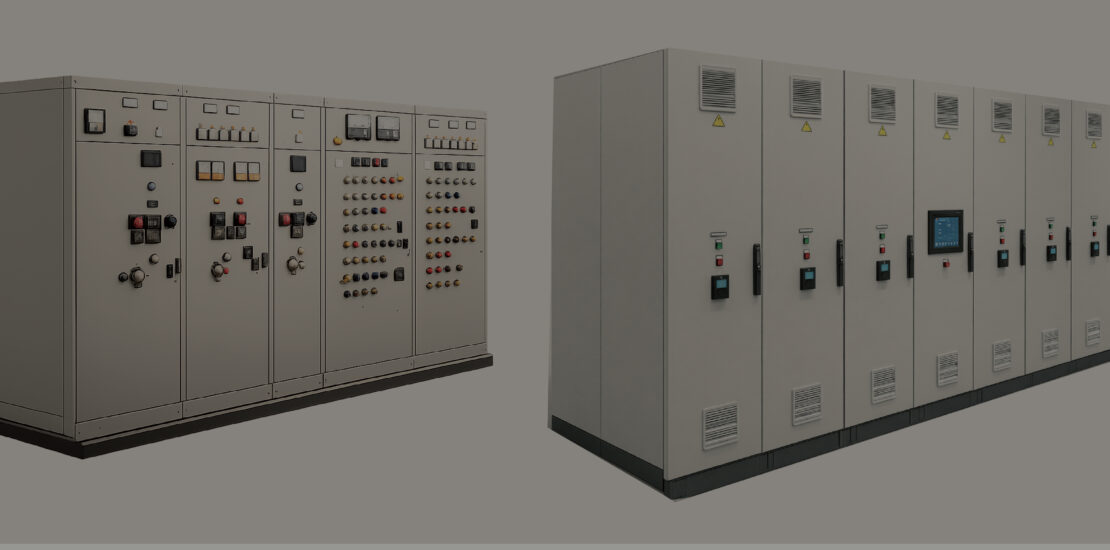
For decades, traditional Motor Control Centers (MCCs) have formed the backbone of motor management in industrial plants. They’ve provided basic local control, circuit protection, and structured wiring — and they’ve done their job well. But with the rise of smart manufacturing, predictive maintenance, and evolving safety regulations, the modern plant demands more.
Enter the Intelligent MCC (iMCC): a digitally connected, diagnostics-capable, automation-ready evolution of the traditional motor control platform. For engineers and plant managers evaluating upgrades, the challenge is knowing what’s actually different, how those differences affect real-world operations, and whether the investment is justified. At Pinnacle Power and Controls, we specialize in designing and integrating intelligent MCC solutions that combine safety, connectivity, and scalability for today’s industrial environments.
In this guide, we’ll break down the key differences between traditional and intelligent MCCs across five critical areas:
- Control and diagnostics
- Safety and compliance
- Automation and integration
- Cost and lifecycle value
- Use-case fit and scalability
Whether you’re specifying a greenfield system or assessing the ROI of a modernization project, this side-by-side comparison will help you make the right engineering decision.
What Defines a Traditional vs. Intelligent MCC?
H3: Core Architectural Differences
Traditional MCCs are built for manual operation and localized control. They use electromechanical components like contactors, overload relays, and breakers. There’s minimal intelligence in the system — faults must be manually diagnosed, and status indicators are limited to panel lights or meters.
In contrast, Intelligent MCCs embed digital communication, programmable control, and real-time feedback into the same architecture. They integrate PLCs, smart relays, power meters, and communication modules (Ethernet/IP, Modbus TCP, etc.) that allow operators to control, monitor, and diagnose systems remotely.
| Feature | Traditional MCC | Intelligent MCC (iMCC) |
| Operation | Manual/local only | Programmable, remote-capable |
| Data Visibility | Minimal (if any) | Real-time voltage, current, faults, energy |
| Motor Start/Stop Logic | Hardwired | PLC-based or SCADA-integrated |
| Fault Detection | Manual testing | Smart relays, logs, alarms |
| Integration | Standalone | Networked to SCADA/PLC/CMMS |
Bottom Line: iMCCs are not just a smarter version — they represent a fundamental shift in how motor control integrates into broader plant automation, safety, and optimization strategies.
Functional Comparison – Control, Diagnostics, and Maintenance
For engineers working in demanding environments, MCCs are not just about switching motors on and off — they’re about visibility, reliability, and quick recovery when something goes wrong. This is where intelligent MCCs deliver their most tangible advantages.
Control Capabilities – From Hardwired to Programmable
Traditional MCCs operate using manual or hardwired control logic. A motor starter might be triggered by a local switch or relay, with no centralized intelligence. Any changes require rewiring. By contrast, intelligent MCCs allow logic-based control using PLCs, enabling automated start/stop sequences, load balancing, interlocks, and communication with SCADA or building management systems.
Example: With an iMCC, an engineer can remotely sequence pumps based on tank levels, rather than relying on manual intervention or basic float switch logic.
Diagnostics & Fault Response – Visibility That Saves Downtime
Traditional MCCs offer limited diagnostic feedback — typically a tripped breaker, a blown fuse, or an indicator light. Technicians often need to inspect physically, test wires, or guess based on symptoms.
iMCCs provide live fault data, including:
- Phase loss
- Overload/overcurrent events
- Harmonics, imbalance, or overheating
- Trip cause, timestamp, and event logs
They also support preemptive alerts for slow-developing issues like bearing degradation or rising current draw — making predictive maintenance possible.
Intelligent MCCs dramatically reduce Mean Time to Diagnose (MTTD), which can save thousands during critical equipment failures.
Maintenance Efficiency – Safer, Faster, and Data-Driven
In a traditional MCC:
- You must open panels to inspect faults
- Testing is done manually
- Bucket changes require downtime and rewiring
In an intelligent MCC:
- Status and alarms appear on the HMI or SCADA
- Technicians can remotely reset non-critical trips
- Maintenance teams receive historical fault logs for root cause analysis
- Many smart MCCs support hot-swappable buckets and predictive alerts
This directly translates into less manual work, fewer risks from arc-flash exposure, and faster recovery from interruptions.
Safety & Compliance – Arc Flash and Operator Protection
Traditional MCCs were not designed with modern safety standards in mind. With the rise of NFPA 70E enforcement and OSHA pressure on arc-flash compliance, facilities can no longer afford the risks of legacy panel access, manual resets, or unlabeled hazards.
Intelligent MCCs are engineered for safety-first operation, both in physical construction and remote functionality — keeping personnel out of the arc-flash boundary and providing the documentation required for compliance.
Arc Flash Risk and Containment
Legacy MCCs require technicians to:
- Open panels to reset faults
- Test components live
- Work inside panels during maintenance
This exposes personnel to arc-flash risks during every fault event or bucket change.
Intelligent MCCs reduce risk through:
- Remote reset and diagnostics
- Arc-rated construction with internal barriers, vents, and reinforced doors
- Smart trip detection with pre-arc warnings
- Remote racking systems or door interlocks for LOTO
Pinnacle Power and Controls MCCs are designed per UL 845 and IEEE C37.20.7, supporting arc-resistant configurations and remote isolation where required.
Compliance Documentation and Inspection Readiness
Meeting NFPA 70E, OSHA, and UL guidelines requires:
- Accurate arc-flash labels
- Single-line diagrams
- Coordination studies
- Clear LOTO procedures
Intelligent MCCs make this easier by:
- Logging events and changes
- Supporting labeled access zones
- Offering digital trip reporting and status history
- Integrating with safety management systems
This is especially critical for audits, insurance inspections, and post-incident reviews.
Integration with Plant Automation and SCADA
Modern industrial facilities demand real-time visibility, centralized control, and interoperability across systems — and MCCs are no exception. Intelligent MCCs are designed to communicate, coordinate, and adapt within a broader automation ecosystem, while traditional MCCs were built to operate in isolation.
Communication Protocols and Network Readiness
Traditional MCCs are often limited to hardwired logic or basic contact closure signals. They cannot support modern protocols or digital feedback.
Intelligent MCCs support:
- Ethernet/IP, Modbus TCP, Profinet, OPC UA
- Dual-network architecture for separation of safety/control and diagnostics
- Remote firmware updates and tag management
These capabilities allow seamless integration into PLCs, SCADA systems, CMMS platforms, and even cloud-based IIoT dashboards.
Real-Time Data Exchange and Control
Smart MCCs enable:
- Centralized monitoring of all motor circuits
- Live fault alerts and trip logs are accessible from HMIs or tablets
- Data historian feeds (vibration, temperature, runtime, power draw)
This gives operators, reliability engineers, and automation teams complete visibility and control from any authorized interface.
With SCADA or DCS integration, MCCs are no longer standalone — they become part of the plant’s operational “nervous system.”
Custom Logic, Sequences, and Remote Overrides
With intelligent MCCs, engineers can implement:
- Load sequencing and runtime rotation
- Interlocked safety conditions
- Demand-based motor control linked to sensors
- Remote start/stop via SCADA or HMI panel
Pinnacle Power and Controls designs MCCs with programmable logic, HMI screen design, and signal mapping included — reducing PLC integration time during commissioning.
Cost, Expandability & Lifecycle ROI
The most common objection to upgrading to intelligent MCCs is the upfront cost. And yes, intelligent MCCs typically cost more at the time of purchase — but the value becomes clear when you examine long-term performance, expansion flexibility, and operational savings.
This section lays out the full economic picture engineers need to present internally.
Upfront Cost Differences
- Traditional MCCs have a lower initial cost due to simpler hardware (no PLCs, smart relays, or communication modules).
- Intelligent MCCs include VFDs, power meters, PLCs, and communication interfaces — adding to initial CapEx.
However, many plants recover that premium through energy savings, faster maintenance, and reduced unplanned downtime within the first 1–3 years.
Modularity and Expansion Capabilities
Traditional MCCs require:
- Panel rewiring to add or remove motors
- Manual installation of new starters or drives
- Downtime and arc-flash exposure during changes
Intelligent MCCs:
- Use modular bucket architecture for plug-and-play upgrades
- Allow for remote configuration and digital tagging of new loads
- Enable staged expansion in parallel to operations
Pinnacle Powr and Controls MCCs are built with modularity in mind, supporting scalable architectures and futureproofing capacity.
Lifecycle Cost and ROI Considerations
Smart MCC ROI drivers:
- Reduced maintenance labor through remote diagnostics
- Less downtime from predictive fault alerts
- Lower energy use via VFD control and load matching
- Streamlined safety compliance and inspection readiness
- Integration with CMMS and analytics platforms
According to DOE and NEMA studies, intelligent MCCs can:
- Cut downtime costs by 30–40%
- Reduce maintenance costs by up to 25%
- Lower motor energy consumption by 15–50% (especially in variable-torque loads)
The result: intelligent MCCs typically deliver full ROI within 18–36 months, depending on the number and type of motors controlled.
Use Cases – When to Choose Intelligent vs. Traditional MCCs
Choosing between a traditional and intelligent MCC is not always black-and-white. The best choice depends on your facility’s motor count, operational complexity, safety requirements, and long-term automation strategy. This section outlines clear, engineering-aligned use cases to help make that decision.
When an Intelligent MCC Is the Right Choice
✅ Facilities with high motor density — where managing dozens or hundreds of drives makes manual inspection impractical
✅ Remote or hazardous locations — such as mines, oilfields, or water infrastructure where technician access is limited
✅ Plants with strict uptime requirements — where even minutes of downtime have high financial or safety costs
✅ ESG- or audit-driven operations — requiring energy monitoring, digital fault logging, and compliance documentation
✅ Plants undergoing digital transformation — where integration with SCADA, CMMS, or IIoT systems is a priority
Example: A power generation plant running 24/7 critical fans and pumps would benefit from iMCC predictive diagnostics, VFD energy savings, and real-time remote access.
When a Traditional MCC May Be Sufficient
✅ Low-motor-count systems — e.g., backup pumps, temporary processes, or pilot systems
✅ Non-critical loads — where downtime doesn’t impact production or safety
✅ Simple, fixed-speed applications — where VFDs or logic control offer limited added value
✅ Budget-constrained projects — where upfront CapEx is prioritized over long-term OpEx
✅ Temporary deployments or construction trailers
Example: A standalone tank farm with only two constant-speed pumps and local control could function well with a basic, traditional MCC.
Pinnacle Power and Controls Recommendation Framework for MCC Selection
Choosing the right MCC isn’t about smart vs. basic — it’s about the right system for your facility’s operations, risk tolerance, and future roadmap.
Here’s a simplified framework to help engineering teams align technical requirements with MCC architecture.
Step 1: Define Your Motor Environment
- Number of motors
- Load types (pumps, conveyors, fans)
- Runtime and duty cycles
- Expansion expectations
If high-density, long runtime, or future growth expected → lean toward iMCC
Step 2: Assess Criticality and Risk
- Impact of unplanned motor failure
- Operator safety zones
- Frequency of fault events
- Regulatory inspection requirements
If uptime or compliance is critical → iMCC with diagnostics, remote reset, and arc-flash protection
Step 3: Map Your Automation Goals
- Do you use SCADA/PLC now?
- Do you plan to monitor assets remotely?
- Any ESG or energy reporting mandates?
- Need to reduce maintenance labor?
If yes to any → intelligent MCC strongly recommended
Step 4: Evaluate Lifecycle ROI
- Maintenance savings
- Energy savings (especially with VFDs)
- Documentation/time saved during inspections
- Reduced downtime cost
If total ROI > 2x CapEx premium → smart MCC justified
Pinnacle Power and Controls helps engineers walk through this entire selection process — from load analysis and cost modeling to PLC programming and remote commissioning. We don’t just build panels — we help you engineer the most resilient, efficient, and scalable MCC solution possible.
Smart vs. Traditional MCCs
Q1: What’s the main difference between a smart MCC and a traditional one?
A traditional MCC provides manual/local control with limited feedback. A smart (intelligent) MCC supports remote monitoring, diagnostics, programmable control, and integration with SCADA/IIoT platforms.
Q2: Can I upgrade an existing MCC to make it “intelligent”?
Yes, partially. Some legacy MCCs can be retrofitted with PLCs, smart relays, and communication modules. However, full functionality and safety may still require replacement.
Q3: Is an intelligent MCC more difficult to maintain?
No — they’re often easier to maintain due to diagnostics, remote access, trip logs, and predictive alerts. Maintenance is more efficient and less manual.
Q4: What industries benefit most from smart MCCs?
Industries with high uptime demands, safety risks, or energy goals — such as mining, oil & gas, manufacturing, utilities, and water treatment — benefit greatly.