
MCC Vendor Checklist: Evaluating Quality and Safety
- February 24, 2026
- Posted by: Salman
- Category: Industrial Panels
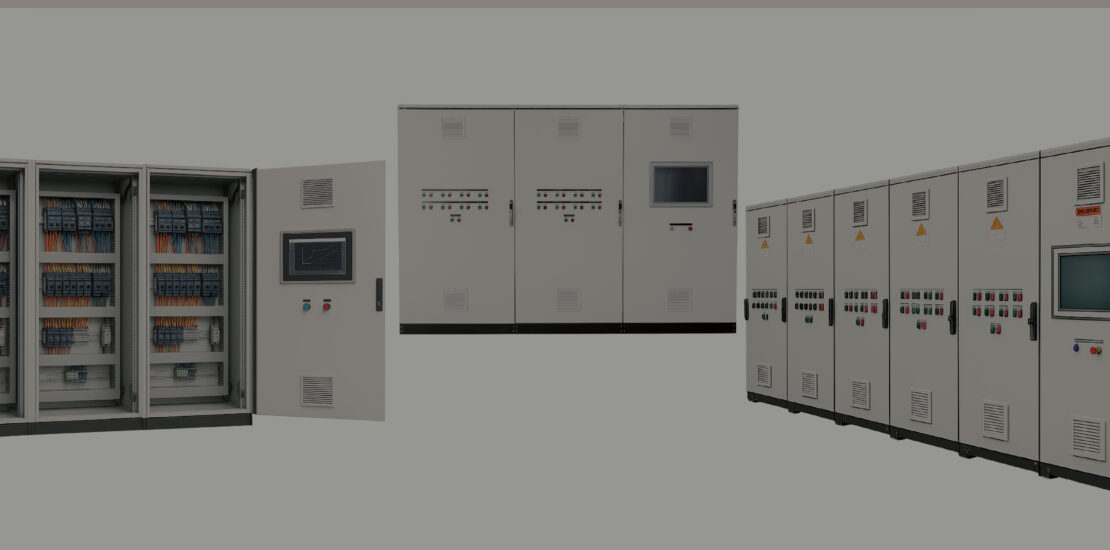
When it comes to Motor Control Centers (MCCs), engineering teams can’t afford to make decisions based on price alone. The right MCC vendor doesn’t just build panels — they ensure safety, reliability, compliance, and performance over the full lifecycle of your system. In industries such as mining, power generation, and manufacturing, MCC failures not only cause downtime but also pose serious safety risks and regulatory exposure.
That’s why this vendor evaluation checklist exists: to help engineers and procurement teams identify MCC manufacturers who meet today’s technical, safety, and compliance standards. From UL 845 certification to factory acceptance testing (FAT) and arc-flash protection, this guide walks through the criteria that define a trustworthy MCC partner — not just a vendor.
1. Code Compliance and Safety Certifications
Choosing an MCC supplier that builds to code isn’t just best practice — it’s often a legal requirement. MCCs must comply with electrical safety standards and provide documentation that proves they’ve been manufactured, labeled, and tested according to those regulations.
Here are the two most critical compliance markers every MCC vendor should meet:
UL 845 Certification
The UL 845 standard governs the construction and performance of MCCs in North America. Vendors who manufacture UL 845-listed MCCs demonstrate:
- Compliance with component layout and segregation standards
- Tested busbar ratings, insulation, and short-circuit withstand limits
- Proper labeling and nameplate data on all compartments
- Verified grounding, bonding, and protective device coordination
Ask every vendor to provide UL 845 certification for their MCC designs — and verify that their production facility is authorized for UL panel builds.
NFPA 70E and Arc Flash Compliance
NFPA 70E outlines the safety requirements for electrical work, including arc flash risk assessments, labeling, and mitigation measures. MCC vendors should be able to support you with:
- Arc-flash-rated compartments (per IEEE C37.20.7)
- Proper door interlocks and LOTO provisions
- Trip coordination and protection zone mapping
- Documentation to support arc-flash labeling for each bucket or section
A vendor that can’t discuss arc flash in detail is not ready for a modern industrial project. Safety starts at the panel — and compliance starts at the vendor.
2. Build Quality and Engineering Standards
While code compliance is the baseline, true engineering excellence is found in the details of construction — from bus bar materials to enclosure design. A well-built MCC doesn’t just pass inspection — it performs better, lasts longer, and maintains uptime in even the harshest environments.
Here’s what to examine when evaluating an MCC vendor’s build quality:
Component Selection and Material Integrity
Reliable MCCs are built using industrial-grade components that are tested, properly rated, and sourced from reputable OEMs. Ask vendors to disclose:
- Which brands of contactors, relays, circuit breakers, and VFDs do they use
- Whether their wiring is tinned, color-coded, and rated for the application
- Heat rating of components under full-load conditions
- Panel cooling methods: ventilation, A/C, or passive design
Beware of “value engineering” shortcuts that reduce upfront cost by downgrading core components — the price you’ll pay in downtime or hazard risk isn’t worth it.
Bus System Design and Structural Durability
The bus bar system is the heart of an MCC, and a weak design can cause hot spots, arc faults, and failures over time.
Look for:
- Copper bus bars for high conductivity and corrosion resistance
- Rated for appropriate short-circuit withstand (e.g., 65kA, 85kA)
- Four-bar systems: L1, L2, L3, and ground (with clear isolation)
- Structural bracing and separation between feeder/main buckets
- Panel doors and enclosures made of 12- or 14-gauge steel, not thin aluminum
Vendors should provide full load ratings and temperature-rise data for their bus systems — and documentation for enclosure gauge and UL ratings.
3. Factory Testing and Quality Assurance
Even the best-looking MCC can fail in the field if it hasn’t been properly tested before shipment. A trusted vendor should perform comprehensive, documented testing to validate wiring integrity, component functionality, and safety performance — not just power it on for 10 minutes.
Here’s how to ensure your MCC vendor doesn’t cut corners on QA.
Factory Acceptance Testing (FAT)
A real FAT includes both functional and safety tests, conducted before the MCC ever leaves the factory floor. Look for vendors who include:
- Point-to-point wiring verification against schematics
- Circuit breaker trip function checks
- Overload relay and VFD test runs
- Control logic simulation (PLC/HMI, where applicable)
- Ethernet/IP or Modbus TCP communication validation
- Full panel continuity and insulation resistance checks
Request a FAT protocol up front — and ask to attend or receive video documentation. Pinnacle Power and Controls provides detailed FAT reports with every system.
Site Acceptance Testing (SAT) and Commissioning Support
The best vendors don’t disappear once the MCC is delivered. Ask if they offer:
- Field technician support for SAT and startup
- Signal verification, I/O testing, and SCADA integration
- Final labeling, arc-flash coordination, and LOTO validation
- As-built documentation delivery and drawing updates
SAT helps catch field issues before startup — saving time, reducing risk, and avoiding rework.
4. Arc Flash Mitigation and Safety Design
Arc flash hazards are among the most dangerous electrical risks in industrial facilities — and MCCs are often at the center of these events. The right MCC vendor doesn’t just understand code; they design with arc flash prevention and technician protection in mind.
This section helps engineers vet vendors on how seriously they take electrical safety in both design and configuration.
Arc-Resistant Construction Standards
Modern MCC vendors should provide arc-resistant options — not just warning labels. Look for panels designed to:
- Withstand internal arc faults (tested to IEEE C37.20.7)
- Use compartmentalized buckets and internal barriers
- Feature venting paths to safely channel blast energy
- Include reinforced doors, hinges, and latch systems
Pinnacle Power and Controls builds MCCs to UL 845 + arc-resistant design standards, supporting safer operations even in high-energy installations.
Remote Operation & Isolation Capabilities
To reduce exposure, look for MCCs that include:
- Remote fault reset and alarm acknowledgement
- Remote racking or disconnect systems
- HMI or SCADA access for control without panel entry
- Door interlocks tied to power status for safe LOTO execution
These features dramatically reduce the need for live-panel work and PPE use, which also lowers arc flash category assignment.
Coordination and Labeling Support
The vendor should help with:
- Breaker coordination studies to limit fault energy
- Arc flash labeling per NFPA 70E and IEEE 1584
- Digital log tracking of trips and safety events
- Integration with site-wide electrical safety protocols
Electrical safety compliance is a system-wide responsibility — but it starts with a vendor that builds with coordination in mind.
5. Technical Support and Documentation
An MCC is only as good as the support and documentation that comes with it. From panel drawings and wiring diagrams to responsive technical help during commissioning or maintenance, engineers should expect more than just a delivery date.
This section outlines how to evaluate a vendor’s post-sale professionalism and engineering transparency.
Engineering Documentation Standards
Ask vendors to provide the following — ideally before the build is even approved:
- 3D MCC layout drawings for coordination
- Point-to-point wiring diagrams and terminal layouts
- Bill of materials (BOM) with part numbers and datasheets
- Labeling references and nameplate schedules
- Arc flash label templates based on test data or coordination studies
Pinnacle Power and Controls delivers full submittal packages — ready for PE review and permitting — to help engineering teams maintain speed and accuracy in project approvals.
Post-Sale Technical Support Expectations
Even the best MCC needs support eventually. Look for vendors that offer:
- Access to live support from controls engineers, not just sales
- Remote troubleshooting help via SCADA or HMI
- Firmware updates and patching for PLCs, HMIs, and smart relays
- Help with replacements, field retrofits, and logic changes
Pinnacle Power and Controls provides a dedicated engineering contact from build to post-installation — minimizing the finger-pointing that comes from vendors who outsource support.
6. Vendor Experience and Industry Fit
Not all MCC vendors are created equal — and experience matters. The most reliable partners have a track record of delivering in similar industrial conditions, whether that’s harsh mining environments, continuous-process manufacturing, or remote energy systems. This section helps you verify their domain expertise, not just technical specs.
Industry-Specific Application Knowledge
Ask potential vendors:
- Have you built MCCs for my industry and load types?
- Can you provide examples from power, mining, O&G, or water treatment?
- Do you understand motor coordination, safety, and runtime requirements for my application?
Pinnacle Power and Controls has delivered custom MCCs for power plants, chemical facilities, mines, and energy infrastructure — each tailored to their environmental, safety, and automation requirements.
Reference Projects and Case Studies
Don’t just ask for product specs — ask for proof. Reputable MCC partners should provide:
- Reference installations similar to your load/voltage requirements
- Photos or videos of deployed MCCs (with client permission)
- Lessons learned from prior projects
- Optional client references or testimonials
Seeing real-world use cases builds trust and credibility — and gives you insight into how well the vendor manages complexity and commissioning.
7. Warranty and Lifecycle Services
A true MCC partner isn’t just focused on delivering a panel — they’re committed to helping you operate, maintain, and adapt that panel for years to come. This section guides engineers in vetting vendors based on service continuity, spare parts, and lifecycle value.
Warranty Coverage and Service Terms
Ask vendors to provide:
- Warranty duration on panels, components, and workmanship
- What’s included: labor, parts, shipping, technician time
- SLA (service level agreements) for response time or remote support
- Clarity on handling third-party component claims (e.g., relays, VFDs)
A one-year basic warranty is standard — but high-quality vendors offer extended coverage with support for field replacements, firmware, and parts sourcing.
Lifecycle Support and Future Adaptability
Well-supported MCCs offer more than just durability — they also evolve with your plant.
Look for vendors who provide:
- Field upgrade kits (e.g., smart relay retrofits, new VFDs)
- Spare parts documentation and reorder system
- Remote health checks or annual maintenance plans
- Support for expansion (e.g., adding buckets or reprogramming PLCs)
Pinnacle Power and Controls provides detailed documentation and remote support options throughout the MCC’s lifecycle — from commissioning to future expansion and rework.
Frequently Asked Questions: MCC Vendor Evaluation
Q1: What certifications should a reliable MCC vendor have?
A qualified MCC vendor should be certified for UL 845 panel builds and comply with NFPA 70E arc flash safety standards. Look for vendors who also meet IEEE C37.20.7 for arc-resistant construction.
Q2: What is FAT, and why is it important for MCCs?
Factory Acceptance Testing (FAT) ensures the MCC is functionally correct, safely wired, and fully tested before it leaves the factory. A good vendor will include point-to-point wiring checks, logic validation, and breaker testing as part of their FAT process.
Q3: How can I verify a vendor builds to high-quality standards?
Request documentation such as wiring diagrams, bus ratings, and short-circuit withstand data. Ask about material quality (e.g., copper bus bars) and whether they perform FAT/SAT testing.
Q4: What post-sale support should a good MCC partner provide?
Expect technical drawings, labeling documentation, PLC/HMI support, spare parts programs, and live assistance during commissioning or expansion. Ideally, support continues well beyond installation.
Q5: Are all MCC vendors able to design for arc flash compliance?
No — many vendors provide only basic labeling or documentation. Choose vendors who offer arc-resistant construction, remote reset features, and breaker coordination services to fully support NFPA 70E and OSHA compliance.